Showing posts with label Facelift. Show all posts

Monday, November 21, 2011

Tata Nano 2012 launched!

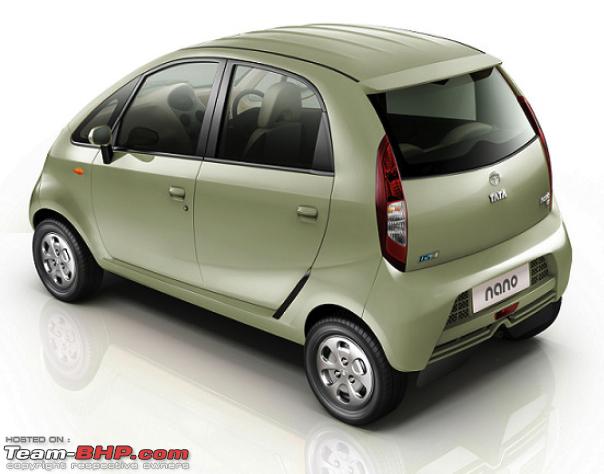
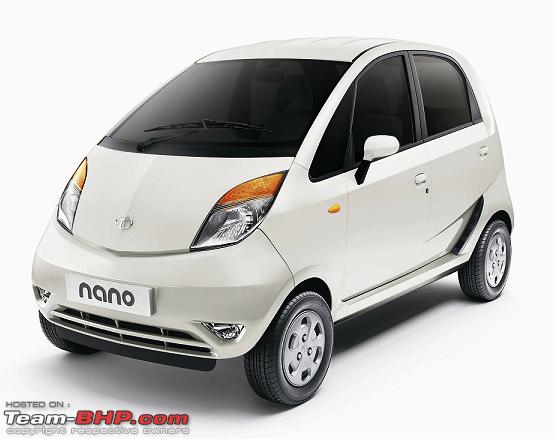
Tata Nano 2012


Tata has launched the small wonder in its 2012 Avatar. The Nano gets a power upgrade delivering an impressive 38PS of power (earlier 35 PS) and 51Nm of torque (earlier 48 Nm).

Even with higher power the car delivers an impressive 25.4 kmpl (earlier 23.6 kmpl) as certified by the Automotive Research Association of India (ARAI)
  • More fuel efficiency at 25.4 kmpl
  • New premium interiors
  • New vibrant colours
  • Best-in-class air-conditioning
  • Lowest CO2 emission, among cars in India
  • Booster-assisted brakes in the Standard variant
The ride and handling, also already highly appreciated by existing owners, now has become even better with a revised suspension set-up, including an anti-roll bar at the front, and a steering mechanism made even easier. While the cabin is quiet, a racier sounding exhaust note now gives the Tata Nano a more assertive road presence. Booster-assisted brakes, already available in the Nano CX and the LX, have now been added to the Nano Standard as well. The Nano CX and LX now have tip-tap mirrors on both the driver and passenger sides. For the Nano Standard, which already has a driver side mirror, the passenger side one can be installed as an accessory.

The interiors are completely new with enhanced premiumness in look and feel – luxurious beige in the Nano LX, rich black in the Nano CX and stunning medium graphite in the Standard version. The exteriors are now a veritable vibgyor of 10 colours, eight of them new — Pearl White, Rouge Red, Aqua Blue, Neon Rush, Serene White, Meteor Silver, Mojito Green, Papaya Orange, Sunshine Yellow, and Champagne Gold. New half or full wheel caps accentuate the distinctiveness.

Commenting on the introduction, Mr. P.M. Telang, Tata Motors’ Managing Director – India Operations, has said, “Tata Nano owners, over 90% of whom are highly satisfied with their choice, have given us valuable insights on what more can be done. We have introduced some of these ideas. We will continue to add features, as has been our tradition across our product portfolio.”

The three trim levels and their key features are:

Tata Nano Standard: The standard version comes with three colour options — Rouge Red, Aqua Blue, Serene White — along with clear headlamps, tubeless tyres and tip-tap driver side mirror, booster-assisted brakes and front suspension with anti-roll bar. The interiors comprise dual-tone vinyl seats and fold-down rear seat.

Tata Nano CX: The Nano CX comes in six colour options — Rouge Red, Champagne Gold, Neon Rush, Meteor Silver, Papaya Orange and Serene White. The interiors have been refreshed with trendy black fabric seats, ebony black interiors, fold-down rear seat with nap rest. Besides these, the variant offers best-in-class air-conditioning with heating (optional), parcel shelf, booster-assisted brakes, tip-tap mirrors on driver and passenger side and half wheel covers.

Tata Nano LX: The top-end variant comes loaded with features like premium beige fabric seats, central locking, door handles, front power windows, cup holder in front console, provision for 12V socket, body coloured bumpers, fog lamps, electronic trip meter, rear spoiler, full wheel covers and tip-tap mirrors on driver and passenger side and booster-assisted brakes. The Nano LX comes in six premium colours –  Pearl White, Papaya Orange, Mojito Green, Sunshine Yellow, Meteor Silver and Champagne Gold.


All the variants come with an unmatched warranty of 4 years or 60,000 kms, whichever is earlier.

The Tata Nano will continue to be available at the same price. The Tata Nano is priced (ex-showroom, Delhi), at Rs.1.40 lakhs for the Nano Standard, Rs.1.70 lakhs for the Nano CX and Rs.1.96 lakhs for the Nano LX.

The Tata Nano is available across 676 outlets. Customers can buy the Tata Nano at an extremely low down-payment, starting from Rs.15,000, and high tenure financing (up to 60 months).

Source: Tata Motors

Wednesday, November 16, 2011

2012 Tata Nano to be launched on 21st Nov 2011

2012 Tata Nano


Tata Motors has been planning upgrade to its little wonder for quite some time now and various new technologies have been experimented with in the past including 3-cylinder engines and even a diesel powerplant with mind-boggling FE figures.

At the same time, enthusiasts too have been waiting for some major changes to the product which took world by storm. There have been talks of power steering, Nano Europa styling, even Tata Pixel has been a contender for second iteration of Tata Nano.

So, the time has come and TATA have folded their sleeves to provide an all new refreshed Nano or rather NANO 2012.

The face-lifted model will get a host of cosmetic changes including new seats and fabric, new front seat headrests, a beige-coloured dashboard to brighten up the interiors, passenger-side outside rear-view mirror, new wheel-cap design and floor mats, and will be available in attractive new colours.

The Nano gets significant mechanical changes. The steering geometry has been reworked and the castor-angle optimised to reduce steering effort, a major complaint in the current car. The new car gets tweaked suspension setup and an anti-roll bar to further improve its ride and handling. Tata’s engineers have increased body stiffness too by making changes to the structure with better bonding of the body panels. This will see an improvement in refinement levels.

Tata has also raised the power by nearly 10 percent, from 35bhp to 38bhp. However, there will be no significant performance gain as the step-up in power has been offset by taller gearing in a bid to achieve the magical 25kpl figure that till now has been accomplished only by other Tata cars — the eV2 and eCS.

The feature list is as follows:

1. If it isn't 25, it isn't enough
Tata has had a fixation with this quarter century mark for quite some time now. It all started with the Indica eV2 and now there is no looking back. I still wait for the time when they will include UV vehicles in their 25kmpl brigade. Guess then, a lot will be pardoned on the quality front.

Well, as the news goes, Tata Nano is now the most fuel efficient Petrol car in the country as per ARAI certification.

2. Its still not power steering but it is lighter
Tata have incorporated some serious changes in the steering column and ride and handling of the car to make the steering "much-much" lighter and anyone owning the old nano would instantly fall in love with the nano 2012.

Again, not truly up to customer expectation a la Power steering but, TATA has looked into the issue and come up with ingenious, and cost effective solution for the time being.


3. No more hang on tight on turns.
Tata have introduced a Anti-Roll bar on this edition to dramatically improve ride and handling of the vehicle. Further, suspension has been tweaked for a softer ride. It is not an auto after all !!!

4. Gone are the days of clatter
Here Tata has gone more than just minor tweaking but actually delved right into design of the vehicle. The B Pillars are now wider, there is more insulation on certain parts and exhaust noise too has been brought down bringing down NVH levels considerably.

Once again, there is no 3 pot powerplant but genuine effort has been made and ingenuity has ruled above complete overhaul.

5. Mirror, Mirror on the car.
Tata went full cost cutting first time around and while some of the omissions were accepted (reluctantly!) by the junta, this was one omission that did not go down well with the customers, especially ones commuting in heavy traffic cities. We are referring to the Left Hand side ORVM.

Though, Tata has been supplying LHS ORVM for quite some time through its service centres but Nano 2012 brings this feature as standard on CX and LX versions with LX getting body coloured ORVM.

6. So comfy...
One of the major changes in this edition of Nano is the seats. Gone are the times of non-existant seat comfort and in comes softly cushioned seats with proper headrests. Frankly, this is a change which will appreciated by all and instantly be recognisable from older iteration. Good Job people!

2012 Tata Nano CX Interior

7. Beige it is, even for the cheapest car in market
Interiors have been revamped. Centre console now stands out in terms of quality of knobs as well as colour choices.

CX gets fabric door linings and seats with silver centre consoles. Beige rules as soon as you step into LX variant. On first impression, new interiors do aim to provide a upmarket feel to the humble car and ticks many right boxes on the interiors department.

8. Look at my new shoes
Not much of change here in terms of upgrade. LX gets full 'alloy look' wheel cover while CX is handed down earlier half wheel caps from old LX.

9. More colour options. Maybe one for your each dinner gown
Tata have scrapped all older colours except Sunshine Yellow and Champagne Gold to bring in much bolder and premium shades. There are 10 colours (4 Non Metallic, 6 Metallic) in all with 8 shades being introduced with Nano 2012. Nano LX gets more exclusive shades unlike only Sunshine Yellow in previous iteration. Pearl White from Tata flagship Safari too gets an introduction in Nano LX and personally is a top choice.

2012 Tata Nano in Pearl White color
Important Notes
  1. There is no change in Product pricing at the moment for new product.
  2. Tata has been shipping new Nano from past few weeks and most dealer will begin showcasing vehicles from this week itself.
  3. There is no change in exterior appearances of the vehicle except introduction of LHS ORVM on CX and LX versions.
  4. No design cues have been borrowed from Nano Europa.
  5. It is not an intermediate product between major product introduction. Tata expects to sell this vehicle through 2012 or atleast till end of 2012. 
Courtesy: AutoCar India & Team-BHP

Saturday, October 1, 2011

Tata Grande loses the Sumo Moniker; Soft launched with a Facelift

Continuing the new found focus of Tata Motors to hive off its vehicles into separate brands that do not conflict with each other, the Tata Sumo Grande will now simply be called the Tata Grande DICOR. This is a typical Tata move to re-brand vehicles which share names with previous offerings that has been previously practiced with cars like the Tata Indica Vista which is now the Tata Vista and the Tata Indigo Manza, which now is the Tata Manza. Thus, Sumo being an abbreviation of long time ex-TELCO boss Suman Moolgaonkar’s name has finally been vanquished from the Grande for good.


While we expected quite a lot from the Grande’s makeover along with this repositioning, the resulting product is merely a mid career visual facelift than any significant change. To be fair to Tata, the car maker didn’t really promise anything with this makeover, which is quite apparent why the Grande didn’t even see an official launch or for that matter a press release to signify its arrival into the market. In fact, it was the Vista’s recent makeover with better interiors and new design bits on the exterior that prompted us to expect much from the Grande.

Any which ways, the Tata Grande MPV now gets a facelifted exterior that includes a chromed front grille and side finishers, outer rear view mirrors with integrated turn indicators, chromed rub rails, chromed door handles(And, this bit will also make it to the Tata Merlin SUV), blacked out B and C-pillars which are nice touches and finally, new graphics which quite frankly aren’t too appealing visually. So, Tata has indeed given the Grande a refresh on the exteriors and this is something the automaker has to be credited for. On the interiors though, not much has changed.


The only difference is that most of the stuff Tata has printed in the brochure as “new” being marketing chutzpah. In fact, we’re quite surprised that Tata is actually misleading prospective customers by calling many of the features as new even though the features in question have been in existence even on the Sumo Grande Mark II. It isn’t to say that the Grande doesn’t have positives, yes sir it does but naming things differently and expecting the customer to fall for it is hitting below the belt Tata, and that isn’t something customers might not take lightly.
The supremely comfortable seats remain, with the 2 captain seats, a three seater bench layout and two seats at the rear in 7 seater and 8 seater configurations. Rear AC vents for both the second and the third rows are superb touches that make living in the Grande a very comfortable experience. These are points which Tata actually needs to advertise instead of harping on things which simply aren’t there or perhaps, Tata has forgotten to upgrade the Grande’s webpage selectively. That is about the Grande’s interiors.


Coming to the engine which powers the Grande, the same tried and tested 2.2 Liter DICOR common rail, turbo diesel engine albeit in a detuned form does duty on this MPV. the engine produces 120 Bhp of peak power and 250 Nm of peak torque, which is higher than the competition, read the Innova and the Xylo. But what is missing on the Grande are safety features like ABS and Airbags, which the competition provides. Suspension too doesn’t see any change with independently mounted coil springs up front and parabolic leaf springs at the rear. 

So, if you’re expecting any change in the bumpy ride quality that was the bugbear of Grande(in Sumo form), you would be disappointed. The Grande is also available with a 2 liter, 90 Bhp turbo diesel engine for BS3 towns and cities. All, the Grande with the 2.2 liter DICOR engine offers a decent package for the money you pay for as the entry level Grande begins at INR 7.1 Lakh Rupees, ex-showroom Delhi. The Grande comes with a 3 year, 100,000 Km warrant, extendable to a 4 year, 150,000 warranty. This is a price level which is just a little lesser than of the Xylo while the Innova remains significantly more expensive.
Source: Indian Cars Bikes

Monday, September 5, 2011

Tata Motors launches new Indigo e-CS with mileage of 25Kmpl


New Indigo e-CS


The Tata Indigo eCS Compact Sedan, which has been the pioneer of compact sedans in India, has gotten yet another upgrade from Tata Motors Limited. This time around, Tata motors have made the already fuel efficient sedan, even more fuel efficient with a raft of changes to boost the fuel economy number further. Now, the Tata Indigo eCS Diesel is touted to deliver a stunning 25 KMPL, thus making it the most efficient sedan in India.

It sports the all new CR4 Common Rail Diesel engine that has a displacement of 1396 cc delivering 70 PS @ 4000 RPM. With a higher torque of 140 NM at a lower 1800-3000 RPM, improvements in gear ratios, clutch-to-start and reduction in the weight of the car by around 10 kg, the Tata Indigo e-CS VX ensures better pickup. The Tata Indigo e-CS VX is also available with the MPFi petrol engine. Both these engines are compliant with BS4 emission norms.

How has Tata managed to squeeze an astounding 25 KMPL from the Tata Indigo eCS Diesel?

Tata Motors attributes the higher fuel efficiency of the 1.4 Liter TDI common rail turbodiesel to five main factors. 
  1. The 1.4 liter turbodiesel engine’s ECU is said to have been optimized for maximum fuel economy. The company stated that the new car has features like SMART EMS (Engine Management System) CHIP that involves perfectly calibrating engine components every micro second to optimise functionality -- right from valve timing to compression ratios, to pressure volume ratios, to air fuel mixture, flawlessly synchronising every engine function to deliver 25 kmpl mileage.
  2. The company also claims an innovatively designed engine head, block and piston assembly that ensures effective intake and circulation of charge (mixture of air and fuel), thereby minimising pumping friction losses. The result is maximum combustion of charge, increased efficiency and power.
  3. The Indigo e-CS aerodynamics are said to have been improved to reduce drag. Tata says that the wheel arches have been redesigned and the body shell has been lightened to make the Indigo eCS a little more aerodynamic.
  4. The gear ratios of the Indigo eCS has been altered for better driveability and economy. 
  5. The Indigo eCS now gets low resistance tyres to reduce rolling resistance to a bare minimum, thus contributing to a higher fuel economy. So, all these changes have helped the fuel economy number of the Indigo eCS Compact Sedan go up by 2 KMPL, from 23 to 25 KMPL.


Other class defining features in the Tata Indigo e-CX VX are stylish R14 alloy wheels, satin finish front grill, headlamps and ORVM with blinkers. They, coupled with body coloured bumpers and chrome inserts on the rub rails, endow it with head turning looks. The interiors have been enriched with dual-tone beige seating and dashboard, premium wood-finish centre console, new instrument cluster with chrome rings and rear centre armrest for enhanced comfort. The plushness is enhanced with keyless entry, ABS, Bluetooth connectivity and electrical controls for ORVMs, besides carrying forward the comfortable AC, power steering and power windows. The car comes with a warranty of 18 months and unlimited kms, for private usage.

Diesel cars have been the flavor of the season and hence this high economy number is a great selling point for Tata. On whether these changes will actually translate into an actual increase in sales is something that we’ll find out in the coming months’ sales numbers. The Tata Indigo eCS Sedan’s VX diesel version is available at an ex-showroom Delhi price of INR 5.8 Lakhs while the top end petrol version comes in at INR 4.97 Lakhs.


Friday, September 2, 2011

Tata Sumo Grande to get a makeover in November


Since 1997, The Tata Sumo was the undisputed leader in the Indian MUV segment until a certain Toyota Qualis came along. Ever since, Tata Motors’ multiple attempts to fight back and regain lost ground with Sumo variants like the Victa and the Victa DI has only become an uphill task with a multitude of capable MUVs like the Mahindra Bolero and Chevrolet Tavera nibbling away at market share.

Tata Sumo Grande MPV


In the meanwhile, Toyota withdrew the QualisMUV at the peak of its demand, much to the surprise of most, and replaced the ultra successful Qualis with the Innova MUV, which soon became a best seller too.  Mahindta responded in a while with the Xylo MPV, which also is a brisk seller. Tata however was quite late to come up with an Innova challenger and when it did, the Sumo Grande was born.
But the sales for the Grande however have bee less than encouraging with the MPV remaining a distant third, behind the Innova and the Xylo. In yet another attempt by Tata to win back some market share and keep the Sumo Grande relevant in the MPV market, a facelift is being planned for the month of November, according to our sources. The Sumo Grande in itself is a very capable MPV that has plenty of potential.
For the uninitiated, the Tata Sumo Grande come with a 2.2 Liter DICOR diesel engine producing 120 Bhp. This engine mated to a 5 speed transmission endows the Sumo Grande with sprightly performance. The Sumo Grande also handles much better than the boat like Mahindra Xylo which pitches and rolls like a drunken elephant making for a very hairy high speed driving experience.
 The price of the Sumo Grande too is lower than both the Xylo and the Innova. So, the Sumo Grande does have some inherent strengths that Tata could really use to give the Sumo Grande a proper makeover by ironing out the rougher edges like the flimsy plastics, the notchy gearbox and the bumpy ride due to the leaf springs suspension layout at the rear.