Showing posts with label Jaguar XKR-S. Show all posts

Wednesday, February 15, 2012

Jaguar Considering Track-Focused XKR-S: Report

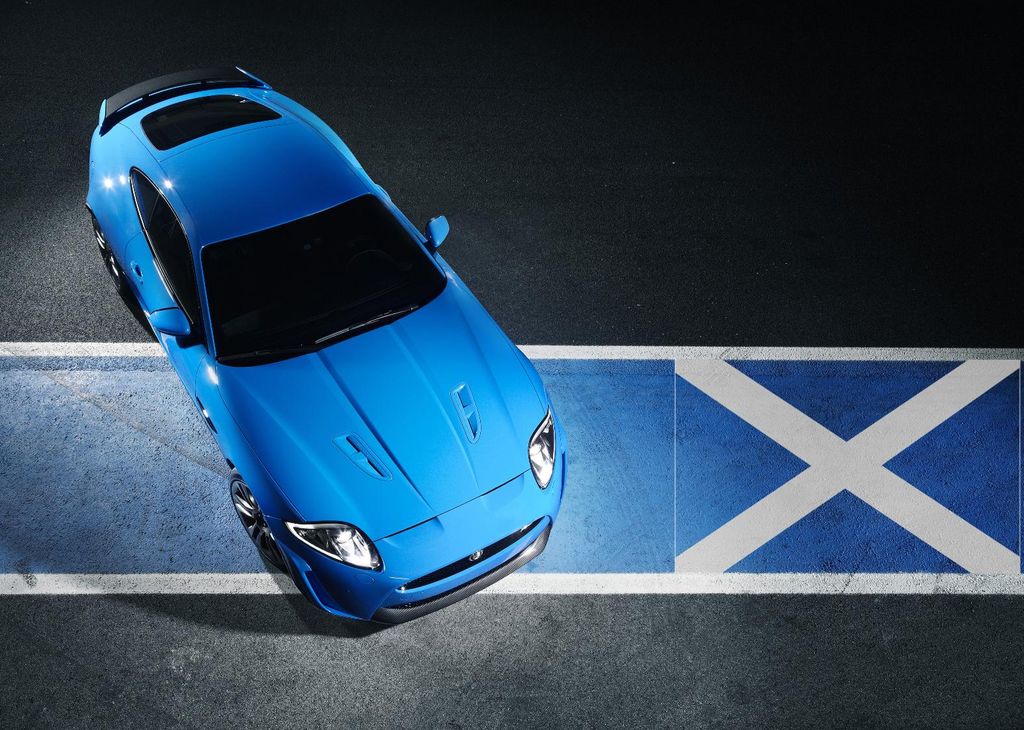
Jaguar XKR-S


To most, the 550-horsepower Jaguar XKR-S is about as hardcore as you’d ever want a Jaguar to be.

However, for the buyer that likes to take his car to a track, race it, and then drive home again, even the XKR-S may not be focused enough.

This has got management at Jaguar wondering if they should build something akin to say, a Porsche 911 GT3 RS or the BMW M3 GTS.

Essentially race cars converted for road-use, the special edition Porsche and BMW are stripped of any amenities that may make life more comfortable. They are then treated to some serious performance modifications, including more power, stiffer suspension, and much more aggressive aerodynamic design.

Jaguar is now considering applying that same formula to a handful of its XKR-S coupes, a car that is already a rare sight given its own limited production run of just 100 units. The information was revealed by the British automaker’s global communications chief, Frank Klaas, who spoke recently with Car and Driver.

If built, the track-focused XKR-S would likely lose its rear seats, have a full roll-cage and fire-suppression system installed, gain a pair of racing bucket seats with harnesses, and have new, easy-to-read gauges fitted.

Jaguar has a special division for building bespoke cars, the in-house Engineered To Order (ETO) group, and the team at ETO are likely to build any track-focused XKR-S should the project be given the green light. Klaas did admit that the ETO group would play a more prominent role in Jaguar’s future.

A concept version to gauge public interest is expected to be unveiled at a major international auto show sometime this year.

Note, Jaguar is planning to unveil a new special edition XK and XKR range at the 2012 Geneva Motor Show next month, though these won’t be available in the U.S. The cars get a number of upgrades including ‘Artisan’ hand-crafted interiors, a 525W Bowers & Wilkins, exclusive colors, and special badging.

Source: Motor Authority

Sunday, December 25, 2011

Playboy 2012 Cars of the Year Announced

PLAYBOY Magazine


Playboy magazine announced the Jaguar XKR-S has been named its 2012 Car of the Year. Playboy’sCar of the Year choices are particularly worthy of mention because its panel is led by Ken Gross, a seasoned automotive journalist and hot-rod enthusiast who was former executive director of the Petersen Automotive Museum in Los Angeles.

The Jaguar XKR-S, which has a starting price of $132,000 for the coupe and $138,000 for the convertible, is the most-powerful production car Jaguar has built. Propelled by a 550-horsepower 5.0-liter supercharged V-8, the XKR-S runs from 0-60 mph in 4.2 seconds and to a 186-mph top speed.

Playboy magazine announced the Jaguar XKR-S has been named its 2012 Car of the Year. 


Staying in the indecent pricing area, we also have the Lamborghini Aventador and the Bentley Continental GTC. Next, we enter the world of family go-fast fun, with the Audi A7 and the Mercedes CLS63 AMG. If you’re more of the egoist type, but still want to go fast, Playboy gives you the BMW 1M Coupe and the Ford Mustang Boss 302.

Those in the market for a crossover are directed toward the fresh Range Rover Evoque, while eco fans should go for the Lexus CT 200h, according to the magazine. For those with more limited budgets, Playboy recommends the Hyundai Veloster and the Fiat 500.

Source: Auto Evolution

Monday, October 17, 2011

Range Rover Evoque named Scottish Car of the Year; Jaguar Gets Three Awards

This weekend Land Rover’s new Range Rover Evoque was named the overwhelming victor of the Scottish Car of the Year award as well as Best Compact SUV by the Association of Scottish Motoring Writers in Glasgow on Friday evening.


Announcing the Evoque's triumph, Jim Murdoch, president of the Association of Scottish Motoring Writers, described the new Land Rover as a “wholly deserving” winner of the Scottish Car of the Year title.

“Built in Britain and with an iconic badge on its bonnet, our top car of 2011 has wowed everyone who’s driven it,” he added. “With more votes than any previous winner, this car is a runaway success. No surprise then that it already has a queue of buyers stretching round the block and beyond. We’re very proud to be among the first to acknowledge the brilliant work that has gone into building this car, especially as it’s so ideally suited to Scotland’s unique driving conditions.

“As two tough winters have shown, the need for capable 4x4s is still as strong as ever in Scotland. When the snow isn’t falling, we also demand a car that works just as well for family and business needs. And as if we’re not already asking for everything in one car, we also want excellent economy and affordable running costs. Our winner achieves all of this and also manages to be one of the most desirable cars money can buy.”

Land Rover is no stranger to success in the Scottish Car of the Year awards: the Discovery 4 was voted top of the Scots in 2009.

Murray Dietsch, Land Rover’s director of engineering programmes, received the Evoque’s award. “Scottish Car of the Year is undoubtedly one of the most important accolades in the industry,” he said. “On behalf of everyone at Land Rover, I would like to thank the association for the award and for recognising that the Evoque is the most exciting car to be driven on Scottish roads this year.”

His views were echoed by Phil Hodgkinson, product development director: “We are all very proud. The Evoque is the result of a real team effort,  with all functions across the company working together to create a unique, exciting and altogether outstanding new vehicle.”

The prize comes hot on the heels of the Evoque’s success in the Auto Express New Car Awards, in which it was declared the magazine’s Car of the Year and Best Compact SUV.

With a choice of three engines, two body styles, three design themes and a wide range of options and accessories, the new Range Rover Evoque offers customers significant choice across a range of price points; the range starts at £27,955. Offered in both 5-door and CoupĂ© forms, the Evoque made its UK showroom debut in September, backed by 20,000 worldwide advance orders, 6000 of those from British buyers.

Jaguar Claims Three Awards

Jaguar also claimed three awards at the Scottish Car of the Year prize. The Jaguar XF was named Best Diesel Car, XKR-S the Best Sports Car and the Jaguar E-type the Most Iconic Car of the Past 50 Years.


Jaguar's Dumfries-born Director of Design, Ian Callum, said; 'To win three categories at the Scottish Car of the Year Awards is very special. Such accolades for our new cars alongside recognition of our heritage demonstrates that Jaguar's mix of sporting DNA, current design direction and class-leading engineering is a successful one. These awards are important to everyone at Jaguar and our dealers across the country.'

Assessed on Scottish roads by journalists from the Association of Scottish Motoring Writers (ASMW), the new 2.2-litre diesel XF with 8-speed gearbox received praise from ASMW Secretary, Stephen Park; 'Diesel cars are now about so much more than just fuel economy. We expect superb refinement and a great drive as standard, so to win this award needs a truly polished performer. With a superb drive and a whisper quiet cabin, our winner stands out for its class and economy, not to mention low emissions that appeal to both private and company car drivers.'

Commenting on the second of the Jaguar range to scoop an award, the XKR-S, Stephen Park said; 'It’s easy to be impressed by fast cars, but this year’s sporting category winner simply took our breath away. Jet-like pace that sees the speedo needle ready to take off is a given, but we’re also looking for something with first class credentials as a desirable car for every occasion. Silky looks combined with steely performance made this a simple choice of heart and head.'

The XKR-S is the fastest Jaguar produced in a generation, capable of accelerating from rest to 100 mph in just 8.7 seconds.

The Jaguar E-type, marking its half-century this year, was named Most Iconic Car of the Past 50 Years.

The night saw Jaguar Land Rover pick up a total of five separate awards with the Land Rover Evoque being named Best Compact SUV on its way to being crowned Scottish Car of the Year.
 

Tuesday, September 20, 2011

Jaguar XKR-S Review - EuropeanCarWeb

Jaguar XKR-S: The fastest cat yet out of the bag.


Other cars cloy the appetites they feed, but the XKR-S makes hungry where most it satisfies. —with apologies to Wm. Shakespeare

In less poetic terms, driving the XKR-S left me wanting more, much more, of the most powerful production car ever to wear the Jaguar badge. Honestly, though, this ravenous appetite for more seat time was an unexpectedly pleasant surprise.

When Jaguar first showed the XKR-S I was skeptical of the whole street/track hybrid concept. And I didn’t really like how the wind tunnel had reworked the svelte XKR coupe. The busier surfaces struck me as an aerodynamic engineer’s wet (fluid dynamics) dream and not the reflection of a Jaguar owner’s secret inner self. So why screw up a really good car, I thought, to build a poseur?

Regardless of this hack’s opinion, it is a good time for Jaguar to offer a high-priced ($132,000) version of the XKR. Jaguar’s place on quality surveys is higher than it’s been in most car buyers’ memories, and profits are up under Indian company Tata’s ownership, so why not offer a hyperbolized Jaguar, particularly if the outstanding result is quite unlike anything else on the road?

Essential elements of the S program begin with the corporate 5.0-liter supercharged V8. Rated at 503 hp in the XKR, it received rewritten software and a revised exhaust for S duty, increasing output to 542; even better, peak torque rises from 451 to 502 lb-ft. Zero to 60 mph comes up in a quick 4.2 seconds, about half a second quicker than the XKR, and 100 mph flashes by in less than 9. The six-speed paddle-shift transmission is right out of the XKR, and it’s one of the best around. Upshifts are without delay, and it can skip gears for quicker downshifts. Fitment of bespoke ZR-rated Pirellis, the additional power and the slippery shape allowed Jaguar to raise the top speed from 155 to an impressive 186 mph, makes the XKR-S a new member of the rather exclusive 300 km/h club.

The S sounds impressive, too, emitting a rumbling idle that hasn’t been heard around the Jaguar works since the race shop closed up. Unique to the S model is a new “performance active exhaust,” which uses valves to moderate low-speed decibels and then unleash them with a baritone growl as the revs increase. The system also features a new crossover pipe that eliminates one of the mufflers and reduces backpressure. And to remind the driver why he’s paid around $35,000 more for his S than for a standard XKR, a small duct siphons a delicious measure of that roar into the otherwise well-insulated passenger compartment.
Additional power is always welcome for track days, but whatever competition cred the XKR-S will earn has to come from below the beltline. Beginning with revisions to the wishbone suspension, Jag’s engineers also stiffened the front uprights, increased spring rates by 28 percent in front and 32 percent at the rear, developed an “active” locking differential, wrote new software for the driver-selectable handling aids and fit lightweight 20-inch forged wheels wrapped by Pirelli P Zeros with staggered sizes of 255/35 front and 295/30 rear.


The most striking element of the makeover, Ian Callum’s design, might suggest the surly visage and bulging muscles of an empty-headed male model stalking a fashion runway, but solid science underlies the aggressive attitude for a reduction of overall lift by 26 percent. The nose is markedly different from previous XKs and sports slimmer LED headlamps, a new front bumper, carbon-fiber splitter, lower spoiler and trick vertical slots at the outer edges of the front fenders to channel air along the lower side sills for greater directional stability. Rear lift is kept in check by a new, S-only wing with carbon center section and a carbon venturi structure under the rear bumper.

Other styling touches unique to the S are gloss-black exterior trim, red or gunmetal brake calipers and a range of five paint colors that includes French Racing Blue and Italian Racing Red. British Racing Green? Nope.

Not so with the XKR-S. It’s balanced in the corners, stable at high speeds, quiet when cruising and voluble when pushed hard. It’s probably the most well-adjusted bipolar car on the road, capable of switching between goddess and whore at the driver’s whim. It not only satisfies on so many levels—it leaves you wanting more. This is the sign of a great car.

For aggressive drivers, the new front buckets are a welcome addition. Broad enough in the beam to accommodate even the plus-sized, and with substantial bolstering for shoulders and thighs, they also are heated and electronically adjustable 16 ways for a level of comfort rarely found in performance seating. Also exclusive to the S are a new three-spoke, multi-function steering wheel; bespoke trim materials and several combinations of micro-piping stitching in the leather upholstery. Customers can opt for a dark aluminum finish to the interior panels or go for more traditional wood accents.

This is all good stuff, but is it enough to transform a luxurious GT into a capable track car, if only for a gentleman racer’s weekend lark at the motorsports club?

Jaguar was bold, even a bit reckless, in choosing an F1 test circuit, Portugal’s Autodromo Algarve. A new car, an unfamiliar and very technical circuit full of elevation changes, blind crests, off-camber corners and short braking zones seemed a recipe for disappointment, if not disaster. I figured on a few safe, lazy laps before hitting the public roads and a less frantic test environment.

But after just a few laps of recon, with the car’s traction aids fully engaged, I felt entirely comfortable. The XKR-S is big and heavy, but it drives like a smaller car because of the prodigious power and exceptional grip. It was able to both feed my need for speed and still make me hungry for more.

This hunger caused me to switch to the new Trac DSC mode, which provoked an entirely different experience. With the engine’s power almost completely unrestrained, an inattentive right foot in the wrong part of the corner overwhelmed the Pirellis and sent the rear end off on a tangent of its own. Bringing the chassis back in line, was, however, very easy due to the quick, precise steering and the active rear nanny, er, differential. Even so, I’d had enough after one lap of “throw and catch” and reverted to a less aggressive setting. Default track behavior is slight understeer, so the quickest way around is slow in and fast out of the corners, letting the engine’s muscle make up the time lost in the braking zone, the weakest link in the car’s repertoire. A good set of carbon brakes would go a long way to making the XKR-S even more trackworthy.
Even with the compromises to comfort and safety, the XKR-S is a capable track car. In the right hands, the XKR-S is bloody fast. It ran the Nordschleife in under 8 minutes, remarkable for a luxury GT—but it probably won’t take fast lap of the day away from, say, a Porsche 911 Turbo, if for no other reason than the brakes, which are just fine on the street but fade after a few hot laps, and the Jag’s weight. Racing technology begins with adding lightness, but the XKR-S tips the scales at a far-from-lightweight 3,900 pounds, about the same as the normal XKR. It helps that the extra mass of the body panels and rear wing is offset by a reduction in unsprung mass (around 11 pounds) from the larger, lighter Vulcan forged wheels, but there’s no evading the fact of the coupe’s heavy footprint, no matter how “racy” it looks.
If the S was good on the track, it was absolutely brilliant on Portugal’s winding backroads. Despite the stiffer suspension, it still gobbled up the miles with the compliant grace expected from the Jaguar motoring experience. In fact, I felt energized rather than exhausted after hours-long blasts over the narrow roads. Driving some performance cars is like making love to a nymphomaniac: great fun at first. Then, when you need a breather, maybe a cuddle, all you get is an insistent tap on the shoulder and the command to climb back into the saddle.


2012 Jaguar XKR-S

Layout
Longitudinal front engine, rear-wheel drive

Engine
5.0-liter V8, dohc, 32-valve, supercharged

Transmission
Six-speed automated manual

Suspension
Front and rear independent double wishbone, coil springs, electronically damped shocks

Brakes
Single-piston swing calipers,
compound discs

Dimensions
Length/Width/Height (in.): 188.7/74.5/51.6
Wheelbase: 108.3 in.
Curb Weight: 3,857 lb.


Performance
Peak Power: 542 hp @ 6000 rpm
Peak Torque: 502 lb-ft @ 2500 rpm
0-60 mph: 4.2 sec.
Top Speed: 186 mph (limited)
MSRP: $132,875

Source: EuropeanCarWeb

Related Posts:
2012 Jaguar XKR-S - First Drive Review
2012 Jaguar XKR-S Review - Forbes


Sunday, September 18, 2011

2012 Jaguar XKR-S - First Drive Review


Jaguar calls the XKR-S the company’s “most responsive, powerful, agile, and driver-focused production car.” It’s also the quickest ever. Yes, it’s quicker and more potent than even the 1992–94  XJ220 supercar.

Stout claim, but the numbers back it up. The twin-turbo 3.5-liter V-6 in the XJ220 we tested 18 years ago [November 1993] ­generated 542 horsepower and 475 pound-feet of torque.

The supercharged and direct-injected 5.0-liter AJ V-8 propelling the XKR-S huffs up 550 horsepower at 6500 rpm and 502 pound-feet of torque between 2500 and 5500 rpm. Throttle response is instantaneous and linear, and the aural accompaniment is habit-forming.

Like the other XKs, the XKR-S employs a responsive six-speed automatic (with paddle shifters for manual operation). Jaguar expects the car to reach a mile per minute in 4.2 seconds (the XJ220 did 4.4), with a governed top speed of 186 mph.

Equally impressive, the S achieves the same EPA ratings as the XKR—15 mpg city and 22 highway—just above the gas-guzzler threshold.

After a day herding this quickest of all cats over mountain roads, we’re inclined to doubt Jaguar’s performance claims. Unless something goes terribly wrong, the XKR-S will be much quicker to 60 than the company forecasts. Hell, last time we tested an XKR, it did the deed in 4.0.


Thanks largely to revised exhaust plumbing—which allowed attendant tweaks to the fuel mapping—the S version of the engine tops the XKR’s output by 40 ponies. Applying the old dollars-per-horsepower formula, the XKR-S price premium may look a little steep. The 2012 XKR coupe will start at $97,500; the XKR-S coupe (a convertible may come along later) will be $132,875 when it reaches showrooms in October.

That’s about $884 per additional filly. But there’s much more to the package than mere muscle.
Let’s start with the functional. The suspension features new aluminum knuckles, stiffer springs (by 28 percent, front; 32 percent, rear), active dampers, revised rear geometry, and an active (read: torque-vectoring) differential. The active diff allowed the chassis team to raise the stability-control threshold.

Static ride height is 10 mm (0.4 inch) lower, and the S rolls on 20-inch forged aluminum wheels wearing a set of Pirelli P Zeros (255/35 front, 295/30 rear). Remarkably, its ride quality is supple. Grip is barnacle-like, and when the driver exceeds the car’s limits—which requires determination—he’ll feel the diff helping to keep the front of the vehicle ahead of the stern.

Aerodynamics are another stability enhancer. Besides reduced ride height, the S sports a new carbon-fiber front splitter and rear wing, rocker-panel extensions, and a rear diffuser. The aero doodads reduce high-speed lift by 26 percent, says the company.

Interior furnishings are distinguished by a pair of supportive leather-clad bucket seats, more aggressively bolstered than their XKR counterparts; elegant needlework; pewter-anodized aluminum trim (nary a splinter of wood); and the expected infotainment electronics, including premium audio and a somewhat finicky nav system.

Color choices include two that supposedly celebrate Jaguar’s racing heritage—Italian red, and French racing blue. No BRG? What’s up with that? Never mind. This is the most satisfying XK yet—handsome, comfortable, and meticulously assembled, as well as seriously fast. The luxury GT game has a compelling new player.

Source: Car and Driver

Friday, September 9, 2011

Jaguar XKR-S can rip pedestrains cloths off at 500 yards:Motoring.co.uk

The Jaguar XKR-S can rip pedestrians' cloths-off at five-hundred yards.

Jaguar XKR-S


The Jaguar XKR-S can rip pedestrians' cloths-off at five-hundred yards. This is thanks to its astonishing power. The 5.0-litre V8 engine produces 550bhp, which is equivalent to more than seven Citroen C1s combined. This monstrous power is sent to the rear wheels via six-speed automatic Transmission. And the result? This two-door coupé rockets to 60mph in a teeth shattering 4.2 seconds. Top speed is a licence losing 186mph. Hold on!

Now, it goes without saying that the Jaguar XKR-S handles beautifully. Even naked pedestrians can see that as this mighty machine roars past. It is also obvious that this £97.000 beauty has agonisingly good looks, more gadgets than the space shuttle, and enough prestige to make Ferrari drivers look twice.

However, this vehicle has another important strength. It complements its new siblings to create a modern and vibrant Jaguar.

Let me explain. In recent years, Jaguar has suffered from an image problem. The marque has been perceived as old fashioned and stuffy - rather too 'golf club' for some. So, RIP the classically themed S-Type. Farewell traditional XJ that sported the same shape since the long-forgotten sixties. Hello striking XF. Greetings to the bang-up-to-date new XJ – and welcome to the party XKR-S. Jaguar has evolved and its claws are sharper than ever.

By Stephen Turvil, motoring.co.uk


Wednesday, August 17, 2011

Jaguar XKR-S Convertible Spied


Jaguar XKR-S Convertible

Jaguar officially unveiled the hardcore XKR-S at the Geneva Motor Show. We were thoroughly impressed with its aggressive looks and monumental exhaust note. Some might say that sacrificing comfort and refinement is not the Jaguar way, but this is more of a “what if?” sort of monster

While we’re on the subject, and taking into account the fact that the XK was designed from the ground up to keep it rigidity in convertible form: What if we cut the roof off and make the XKR-S a convertible?

The Jaguar XKR-S Convertible was spied when testing at NĂĽrburgring. Being tested was a red NĂĽrburgring prototype that looked pretty complete, which points to the fact that its launch pad can't be too far away, even if it's only an unveiling, and that points to the Frankfurt Auto Show to be held next month.

Powertrain and performance details could mirror the coupe. Figures for the Jaguar XKR-S Convertible droptop would produce 550 horsepower and 502 pound-feet of torque that comes from the 5.0-liter V8. The Jaguar XKR-S Convertible hardtop would get to 60 kmph in 4.2 seconds.

As you can see from these spyshots, the changes to the body over the regular XKR-S Convertible include a more aggressive-looking front bumper, re-profiled side skirts, additional air vents on the hood and bumpers, a large rear wing and a redesigned rear bumper housing a diffuser and four exhaust tips.